Online Bill Pay
Web Registration
Schedule Consultation

800-383-3831

Posted by: Missouri Eye Institute in Blog on February 2, 2026
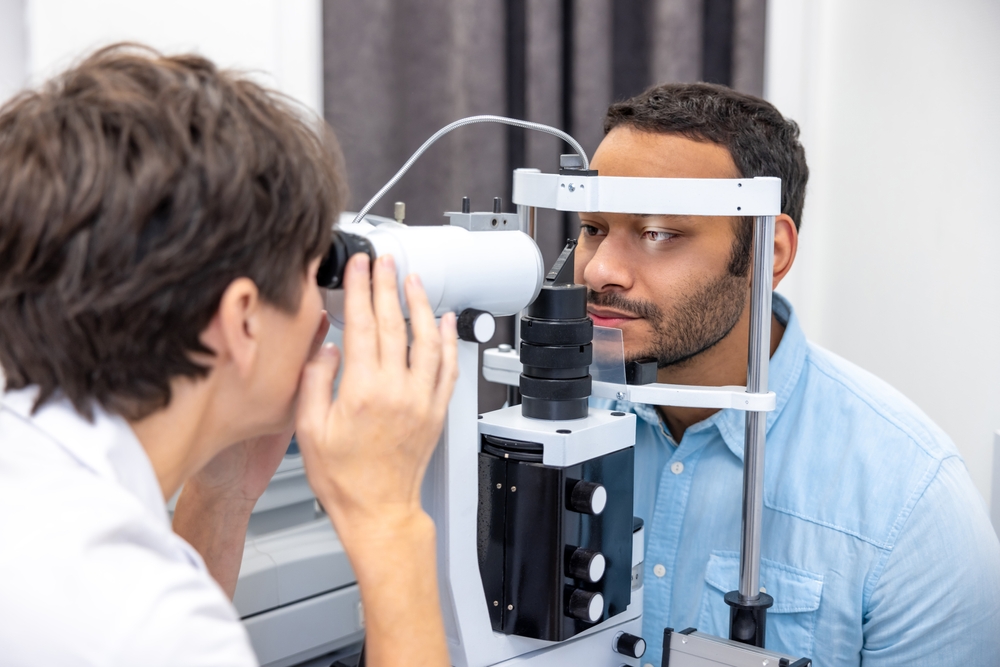
If you’ve never visited an eye doctor before, you might be wondering what actually happens during the appointment. Will there be uncomfortable tests? How long will it take?
Keep reading to learn what to expect during your first eye exam so you can feel more relaxed and prepared for your first ophthalmologist visit.
Before you arrive for your first ophthalmologist visit, gather a few important items.
Bring your insurance card, a current list of medications (including vitamins and supplements), and any previous eye care records if you have them. If you wear glasses or contact lenses, bring those along too. Your eye doctor will want to see what prescription you’re currently using.
You may also want to arrange for someone to drive you home. Many comprehensive eye exams include pupil dilation, which temporarily makes your vision blurry and increases light sensitivity. This effect usually wears off within a few hours, but having a driver can make your trip home more comfortable.
Your appointment will start with a review of your health history and any vision concerns you’re experiencing.
A technician will perform several preliminary tests before you see the doctor. These tests help measure how well you see at different distances, check the pressure inside your eyes, and assess your peripheral vision. Each test is quick and painless.
Next, your ophthalmologist will conduct a thorough examination of your eyes. This includes looking at the outer structures of your eyes, such as your eyelids and the surface of your eyes. Using specialized instruments and bright lights, your doctor will examine the internal structures as well.
If your doctor needs a better view of your retina and optic nerve (the structures at the back of your eye), they may use eye drops to dilate your pupils. The drops take about 15 to 20 minutes to work. Dilation allows your doctor to see more of the inside of your eye and check for conditions like glaucoma, macular degeneration, or diabetic retinopathy.
Once your examination is complete, your ophthalmologist will sit down with you to discuss what they found. They’ll explain any diagnoses in clear terms and answer your questions about your eye health. If you need treatment, whether that’s a new glasses prescription, medication, or another type of care, your doctor will walk you through your options.
This is your chance to ask about anything that concerns you. How often should you schedule eye exams? Are there ways to protect your vision as you age? What symptoms should prompt you to call the office?
Your ophthalmologist at Missouri Eye Institute is there to help you understand your eye health and feel confident about any next steps.
Your first visit to the ophthalmologist is a valuable step in protecting your vision for years to come. Whether you need a new prescription, treatment for an eye condition, or simply peace of mind about your eye health, regular eye exams give you the information you need.
Schedule your comprehensive eye exam at Missouri Eye Institute in Springfield, MO, today and take control of your vision health.
Springfield
1531 E Bradford Parkway Ste 100
Springfield, MO 65804
Branson
1000 James F. Epps Rd Ste 2
Branson, MO 65616
Joplin
4500 E 32nd St
Joplin, MO 64804
